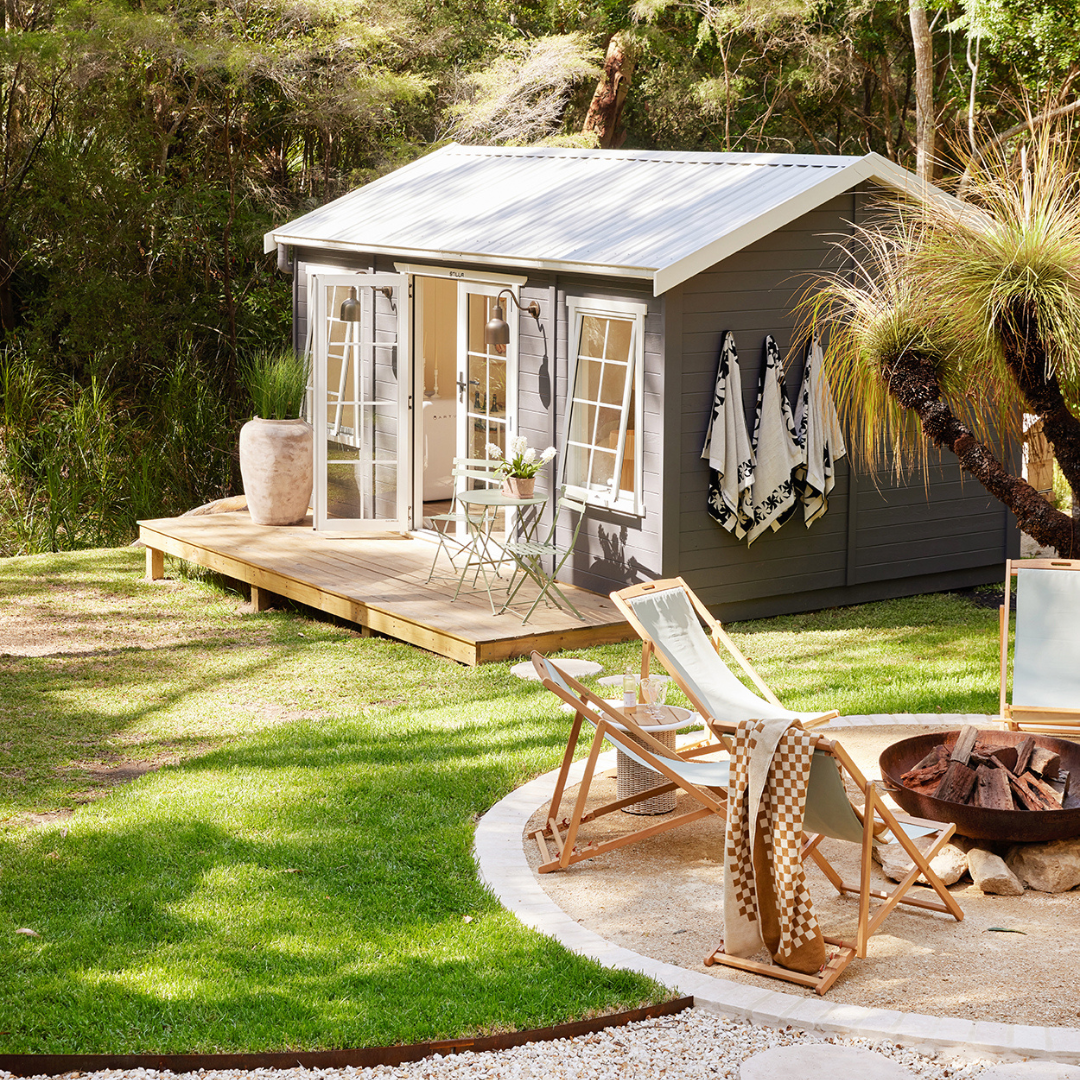
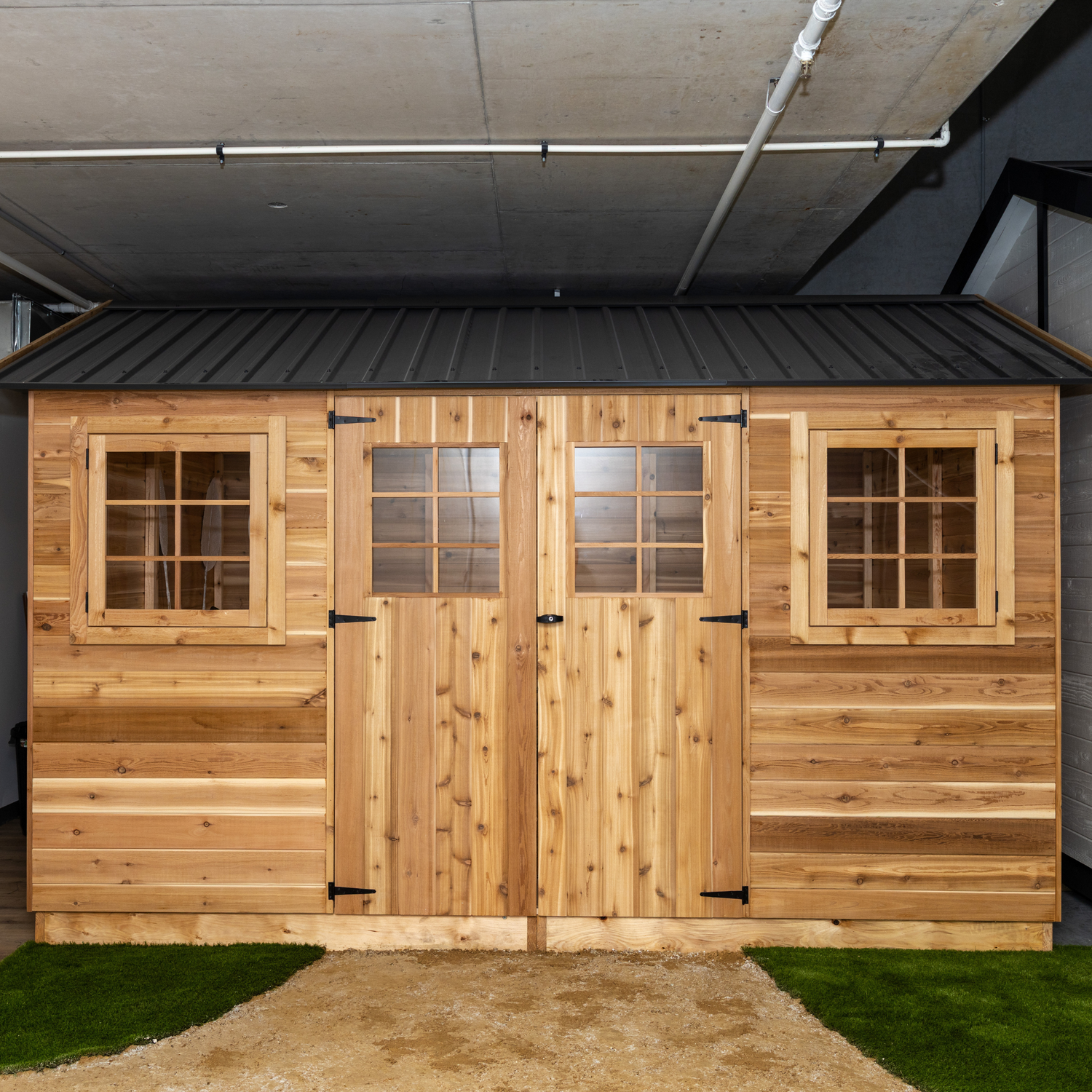
Cedar is one of the most attractive and durable timbers you can use for a shed or studio. It is naturally resistant to insects, well suited to outdoor conditions, and widely chosen for exterior buildings. It is also a natural, porous timber, which means it can absorb and release a small amount of moisture as conditions change. Once you understand that, it becomes much easier to see why some surface seepage or darkening can appear after rain and why the right coating system makes such a difference.
Cedar is naturally porous
Cedar has an open grain and natural oils that help it perform well outdoors, making it water resistant but not necessarily waterproof. Like other exterior timbers, it moves through normal wet and dry cycles. It may absorb a little surface moisture, swell slightly, and then dry out again as the weather improves. This is a normal part of how cedar behaves in an exterior environment.
Why you may see some seepage during wet weather
During heavy rain or prolonged wet weather, uncoated cedar can sometimes show darkening, dampness, or light surface seepage on exposed end grain, doors, windows, and other exposed cedar surfaces. That does not automatically mean the building is leaking. In many cases, it is simply the cedar taking in some surface moisture during the weather event and releasing it again once conditions dry out.
In shed styles with exposed internal cedar, you may also notice some moisture internally after rain if the timber has been left uncoated. In Stilla Classic models, this is usually limited to the cedar doors and windows. In Stilla Designer models, you would not generally expect to see internal moisture after rain once the building is properly installed, aside from possible temporary moisture during installation if internal studs become wet.

What happens if cedar is left uncoated
If cedar is left uncoated, it will naturally weather to a silver-grey colour over time. Many people like that look, and it is mostly cosmetic. The trade-off is that uncoated cedar absorbs and releases moisture more freely than coated cedar, so weathering, slight movement, and visible dampness on exposed areas can be more noticeable.

Why painting or coating cedar helps
Painting, staining, or coating cedar helps slow moisture absorption and improves the timber's weather resistance. It does not make cedar completely waterproof, but it does help stabilise the surface, reduce visible seepage on exposed areas, and provide better protection against tannin bleed and surface staining. A properly coated cedar shed also looks more finished and is generally easier to maintain.
If you are changing from a dark stain to a lighter paint colour, the right primer and topcoats will also help create a more even finish.
Why cedar needs the right preparation and primer
Cedar contains natural oils and tannins. If it is coated without the right preparation, those tannins can bleed through and leave yellow or brown staining on the finished surface. That is why prep and priming matter.
Ensure you use a high-quality primer that is specifically marked as suitable for cedar and designed to block tannins or stains. If you are unsure, check the product label or ask your paint supplier before you start.
How to paint cedar properly
1. Let the cedar dry and inspect it first
If the shed is relatively new, the main priorities are to make sure the cedar is dry and to lightly sand any rough areas or cedar burs. Then remove the dust before priming or painting. If the cedar has been left exposed for months, has weathered grey, is dirty, mouldy, or has old stain residue, it should be cleaned and if needed, treated before coating.
2. Wash only if needed
Not every cedar shed needs washing before painting. Washing is mostly useful when you are dealing with dirt, mould, greyed weathering, or old residue. If you do wash the timber, use a gentle hand wash or very low-pressure clean, then let the cedar dry thoroughly before coating.
3. Prime the cedar properly
Priming is one of the most important parts of painting cedar. Use a high-quality stain-blocking or tannin-blocking primer suited to cedar. If you are covering a dark stain with a pale or light colour, you may need an extra priming coat to build a more uniform base.
It is especially important to coat both sides of cedar doors and windows, not just the outside face. Because these are opening elements, both sides can be exposed to rain and moisture. Leaving one side uncoated can lead to moisture being visible on the unprotected side, especially near the bottom edges.
STILLA RECOMMENDED OIL BASED PRIMER (1 x Coat): Dulux 4L White Prepcoat 1Step Oil Based Primer Sealer And Undercoat - 4L

4. Choose the right topcoat
For the paint finish: use a high-quality exterior acrylic paint or other exterior coating system recommended for cedar. These finishes should be flexible enough to move with the timber through normal changes in moisture and temperature. If you are moving from a darker stain to a pale yellow or another light colour, expect to apply multiple coats for full coverage.
STILLA RECOMMENED TOP COAT (2 x Coat): Cabot's 10L Colorbond Monument Timbercolour Deck & Exterior Paint

If you are staining or using a clear coat
The process above is for a paint system. If you are staining the cedar or applying a clear exterior coat, the prep and coating steps may be different. Always follow the manufacturer's system for cedar, including any recommended prep coat, number of coats, and maintenance cycle. The same principle still applies: coat all exposed cedar surfaces properly, including both sides of doors and windows.
Painted cedar is easier to maintain
Once cedar has been painted or coated correctly, ongoing maintenance is much simpler. Recoating later is usually straightforward, and worn spots can be prepared and recoated as needed. Cedar is an excellent timber to paint when it has been properly prepared, and the right coating system gives it an added layer of protection while keeping the natural benefits of the timber.